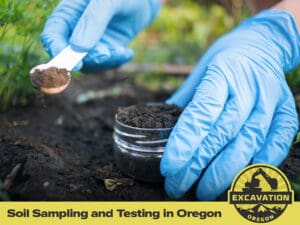
 When planning a commercial development project in Southern Oregon or Northern California, soil sampling and testing are among the most critical steps to ensure the project’s success. The foundation of any structure—whether a retail space, industrial facility, or residential development—relies on stable, supportive soil. Without thorough testing, developers risk encountering unforeseen complications that can lead to costly delays or structural failures. This article explores the importance of soil sampling and testing for commercial development and why partnering with Excavation Oregon ensures a smooth and successful process.
Why Soil Sampling and Testing Are Essential
1. Determining Soil Composition
Soil is not a uniform material; its composition varies widely depending on the location, and even within a single site, there may be significant variations. A development site can contain a mix of clay, sand, silt, gravel, or organic matter, each with unique characteristics that influence its behavior under different conditions. Testing identifies the proportions of these components, helping engineers and developers make informed decisions about site preparation, drainage systems, and foundation design to ensure stability and long-term performance.
For example:
 Clay-heavy soils tend to retain water, which can lead to swelling during wet seasons and shrinking during dry periods. This expansion and contraction can compromise the integrity of foundations, making proper stabilization essential.
- Sandy soils typically drain well but lack cohesion. They may require significant compaction to prevent settling, which could otherwise lead to uneven surfaces and structural damage over time.
- Silt soils can retain moisture and are prone to erosion, posing risks during heavy rainfall. Mitigating these issues often involves proper grading and drainage solutions.
- Organic-rich soils decompose over time, losing volume and creating voids that can undermine structures. These soils often need to be excavated and replaced with more stable materials.
 Clay-heavy soils tend to retain water, which can lead to swelling during wet seasons and shrinking during dry periods. This expansion and contraction can compromise the integrity of foundations, making proper stabilization essential.
Understanding these variations is critical for designing safe, durable commercial projects. Soil testing provides the data necessary to address these challenges, ensuring that every project begins with a solid foundation.
2. Evaluating Bearing Capacity
The bearing capacity of soil refers to its ability to support the weight of buildings or structures placed on it without undergoing excessive settlement or failure. It is one of the most critical factors in ensuring the stability and safety of a construction project. If the soil lacks sufficient bearing capacity, it can result in uneven settling, cracked foundations, or, in extreme cases, catastrophic structural failure that compromises the safety of the building and its occupants.
Soil testing is essential to determine the bearing capacity of the ground before construction begins. This testing identifies potential weaknesses or inconsistencies in the soil, ensuring it can handle the intended load. If the soil is inadequate, solutions such as piling, compaction, or soil stabilization techniques can be implemented to improve its load-bearing properties. By addressing these issues proactively, soil testing helps prevent costly repairs and ensures a durable, safe foundation for the structure.
3. Identifying Potential Hazards
Soil testing can reveal:
- Liquefaction risks: One critical risk in these areas is liquefaction, which occurs when saturated soils lose their strength and behave like a liquid during an earthquake. Soil testing can identify areas prone to liquefaction, allowing engineers to design reinforced foundations or implement deep piling systems to mitigate this risk.
- Drainage issues: Regions with impermeable soil layers, such as clay-rich soils, are prone to drainage issues that can cause water pooling, foundation damage, or soil instability. Testing can guide the installation of advanced drainage systems to address these concerns.
- Erosion potential: In areas with heavy rainfall, the erosion potential of certain soil types poses another challenge. Soil testing provides insights into erosion-prone areas, enabling developers to implement strategies like grading, retaining walls, or vegetation barriers to prevent soil loss.
By addressing these risks early, developers can incorporate mitigation strategies into their plans, such as improved drainage systems or reinforced foundations.
4. Ensuring Compliance with Regulations
Both Oregon and California enforce strict environmental and building regulations to ensure construction projects meet safety, environmental, and structural standards. Soil analysis is a key requirement under these laws, as it ensures that the site is suitable for development and minimizes potential risks. Conducting soil testing ensures compliance and helps developers avoid costly fines, legal issues, or project delays due to regulatory violations.
One critical aspect of soil testing is identifying potential contamination from previous land use. Sites that were once industrial facilities, gas stations, or agricultural properties may have soil contaminated with hazardous substances like heavy metals, chemicals, or petroleum products. Identifying and remediating these contaminants is legally required before development can proceed.
By addressing these issues early in the process, developers can meet regulatory requirements, avoid unexpected complications, and proceed with confidence, knowing their project aligns with state and local laws. Soil testing thus serves as a vital step in ensuring environmentally responsible and legally compliant construction.
The Soil Sampling and Testing Process
Step 1: Site Evaluation
The process begins with a thorough evaluation of the site’s geography, history, and intended use. Engineers and geologists assess potential concerns, such as slope stability or nearby water sources, to determine the scope of testing needed.
Step 2: Soil Sampling
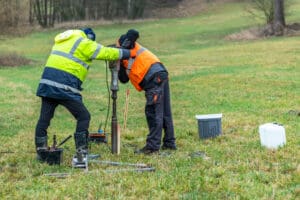
Soil samples are taken from various depths and locations across the site to ensure a comprehensive understanding of subsurface conditions. This process typically involves:
- Auger drilling extracts soil from deeper layers.
- Test pits are dug to observe soil profiles visually.
- Core sampling for undisturbed samples is needed for advanced analysis.
Step 3: Laboratory Testing
Once collected, samples are sent to a laboratory for analysis. Common tests include:
- Moisture content to assess drainage and compaction needs.
- Atterberg limits to measure the plasticity and shrink-swell potential of soils.
- Compaction tests to determine the optimal moisture level for soil compaction.
- Permeability tests to evaluate drainage capacity.
- Chemical analysis to detect contaminants or corrosive elements.
Step 4: Analysis and Reporting
The data collected is compiled into a detailed report outlining:
- Soil characteristics and bearing capacity.
- Recommendations for site preparation and foundation design.
- Potential hazards and mitigation strategies.
- Compliance with local regulations.
Choose Excavation Oregon for Your Next Project
 When it comes to soil sampling, testing, and excavation, experience and expertise make all the difference. Excavation Oregon is a trusted partner for commercial developers in Southern Oregon and Northern California. Here’s why:
1. Local Knowledge
With years of experience in the region, Excavation Oregon understands the unique geological conditions and regulatory requirements of Southern Oregon and Northern California. This expertise allows us to anticipate potential challenges and provide tailored solutions.
2. Comprehensive Services
Excavation Oregon offers a full suite of services, from soil sampling and testing to site preparation, grading, and excavation. By managing the entire process, we ensure seamless coordination and consistent quality.
3. Advanced Equipment and Techniques
We use state-of-the-art equipment to collect accurate soil samples and perform precise excavations. Our commitment to innovation ensures your project benefits from the latest advancements in excavation technology.
4. Commitment to Safety and Compliance
Safety is our top priority. We adhere to strict safety protocols and ensure all work complies with local, state, and federal regulations. You can trust us to protect both your project and the surrounding environment.
5. Customer-Focused Approach
At Excavation Oregon, we pride ourselves on building lasting relationships with our clients. We’re not just contractors; we’re partners in your project’s success. From initial consultations to project completion, our team is here to provide expert guidance and support.
Contact us today to get started.
Soil sampling and testing are foundational to the success of any commercial development project. By identifying potential challenges and providing actionable insights, this process sets the stage for safe, efficient, and cost-effective construction. In Southern Oregon and Northern California, where diverse terrain and unique environmental conditions add complexity, partnering with an experienced excavation company is essential.
Excavation Oregon has the expertise, resources, and dedication to make your project a success. Whether you’re breaking ground on a new retail center, industrial facility, or housing development, we’re here to ensure your site is ready to support your vision. Contact us today to learn more about our services and schedule an estimate.