
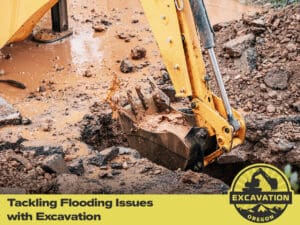
 Flooding is a significant concern for property owners and developers in Southern Oregon. Our region’s diverse terrain, from densely forested mountains to low-lying valleys, makes it vulnerable to water accumulation that can damage structures, erode land, and disrupt everyday life. Whether dealing with seasonal heavy rains, overflowing streams, or poor drainage infrastructure, the right excavation strategies can play a critical role in flood prevention and mitigation. If your property collects water or is near a river, pond, or lake, it may be time to start tackling flooding issues with excavation.
Southern Oregon experiences a mix of Mediterranean and maritime climates, with wet winters and dry summers. During the rainy season, excessive rainfall can overwhelm natural and man-made drainage systems, leading to localized flooding. Poorly graded land, inadequate stormwater management, and compacted soil can all contribute to standing water and property damage.
To effectively reduce flooding with excavation, property owners must assess the topographical and hydrological factors at play. Proper excavation planning and execution can redirect water flow, improve drainage, and protect land from erosion and long-term flood risks.
How Professional Excavation Can Reduce Flooding
Professional excavation services offer a range of solutions to mitigate flooding risks. These services involve strategic land reshaping, installation of drainage systems, and reinforcement of existing landscapes to ensure proper water runoff. Below are key ways that excavation can help reduce flooding in Southern Oregon.
1. Grading and Sloping for Proper Drainage
One of the most effective ways to control water flow is through grading and sloping the land. Proper grading ensures water moves away from structures rather than pooling around foundations or driveways. Excavation experts analyze the land’s natural contours and modify it to create a controlled slope that directs excess water toward designated drainage areas.
In many cases, regrading a property can be enough to alleviate persistent flooding issues. However, in more severe cases, additional drainage solutions may be necessary.
 2. Installing French Drains and Trench Drains
 2. Installing French Drains and Trench Drains
A well-designed drainage system is essential for reducing flooding. Two common excavation-based drainage solutions include:
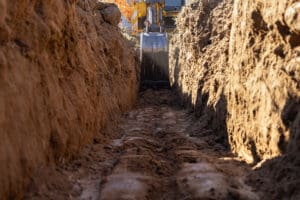
- French Drains – These consist of a trench filled with gravel and a perforated pipe that directs water away from problem areas. French drains are particularly effective in residential properties with frequent yard flooding or foundation seepage.
- Trench Drains – Often used in commercial and industrial settings, trench drains are shallow, grated channels that collect and redirect surface water, preventing it from pooling in driveways, parking lots, or walkways.
Excavation professionals can assess the unique needs of a property and determine the most effective drainage solution to prevent standing water and long-term flood damage.
3. Creating Retention Ponds and Swales
 3. Creating Retention Ponds and Swales
For large properties or commercial developments, constructing a retention pond or swale can be an excellent way to manage stormwater.
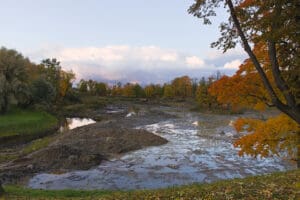
- Retention Ponds – These man-made ponds collect and store excess rainwater, gradually releasing it into the ground or stormwater system. Retention ponds prevent large surges of water from overwhelming local drainage systems, reducing the risk of flooding.
- Swales – Shallow, vegetated ditches that slow down and channel rainwater runoff. Swales help prevent soil erosion while filtering and absorbing water naturally.
Both retention ponds and swales require expert excavation work to ensure proper placement, depth, and functionality.
4. Installing Culverts and Underground Drainage Pipes
For properties near roads, driveways, or small streams, installing culverts or underground drainage pipes can help prevent water buildup and road erosion. These features allow water to pass safely underneath critical areas rather than pooling on the surface.
Excavation professionals can determine the appropriate size and material for culverts and pipes based on the expected water flow and environmental conditions. Proper installation is essential to prevent blockages and long-term maintenance issues.
5. Soil Stabilization and Erosion Control
Heavy rains can cause significant erosion, particularly on slopes or in areas with loose soil. Professional excavation can include soil stabilization techniques to prevent erosion and improve flood resilience. Methods include:
- Riprap Installation – Large stones placed along slopes, streambanks, or drainage channels to prevent soil erosion.
- Terracing – Cutting steps into a hillside to slow down water runoff and reduce erosion.
- Silt Fences and Erosion Control Blankets – Temporary measures to protect exposed soil during construction or landscaping projects.
By implementing these techniques, excavation contractors help reinforce landscapes against flood-related damage.
We’re the Pros You Need for Tackling Flooding Issues with Excavation
Reducing flooding risks requires expertise in hydrology, soil composition, and land grading. Excavation Oregon brings the necessary skills, equipment, and experience to design and implement solutions for tackling flooding issues with excavation.
What you’ll get with Excavation Oregon:
- Expert Site Evaluation – Our trained team can assess water flow patterns and determine the most effective flood prevention strategy.
- Precision Equipment and Techniques – Our professional excavation ensures accurate grading, drainage installation, and soil reinforcement.
- Compliance with Local Regulations – Southern Oregon has environmental and zoning laws that govern land alteration. A licensed excavation contractor at Excavation Oregon ensures compliance while minimizing environmental impact.
- Long-Term Cost Savings – Preventing flooding damage upfront saves homeowners and businesses thousands of dollars in repairs and property loss.
Flood prevention should be a long-term consideration for any property owner in Southern Oregon. Regular inspections, drainage maintenance, and landscape adjustments can help mitigate flood risks over time. Working with an experienced excavation contractor ensures that flood control measures are implemented correctly and remain effective for years to come.
If you are experiencing flooding issues or want to protect your property proactively, Excavation Oregon is here to help. Our team specializes in excavation solutions tailored to Southern Oregon’s unique landscape and weather patterns. Contact us today to discuss your flood prevention needs and find out how professional excavation can safeguard your property.